The Story
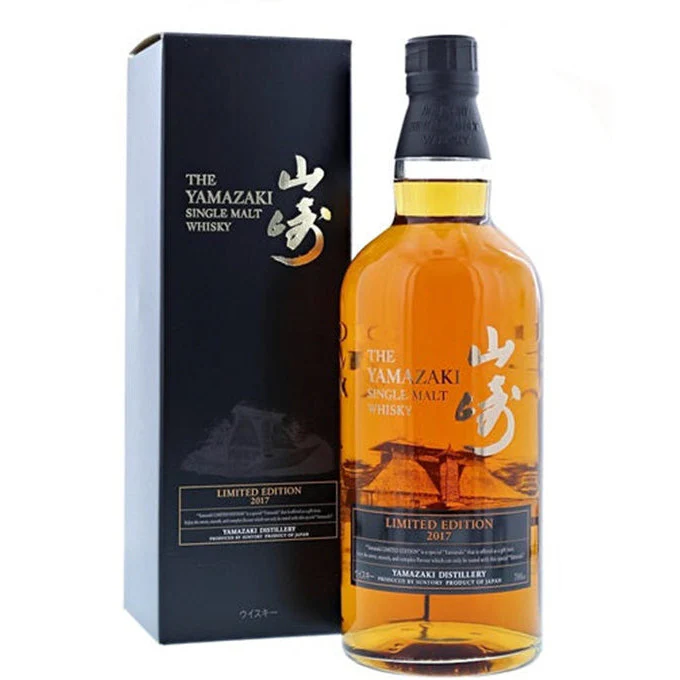
The 2017 Limited Edition release from Yamazaki — Japan's oldest malt whisky distillery. A Mizunara oak-influenced expression produced in extremely limited quantities, one of the most anticipated Japanese whisky releases of its year.
Yamazaki Limited Edition releases are produced on an irregular schedule, with gaps of multiple years between editions. The 2017 followed a significant absence from the LE program, making it among the most eagerly awaited Yamazaki releases in recent memory. Like previous Yamazaki LEs, the 2017 draws from the distillery's multi-cask maturation program — American oak, Spanish sherry oak, and the rare Mizunara Japanese oak that takes 200 years to mature to barrel-making size.
The Yamazaki Distillery was established in 1923 by Shinjiro Torii at the confluence of three rivers south of Kyoto — chosen for its soft water and distinctive mountain microclimate. It is Japan's oldest malt whisky distillery and the birthplace of Japanese whisky as a commercial category. Each Yamazaki Limited Edition is a specific moment in the distillery's maturation program — a snapshot that cannot be replicated once the stock is exhausted.
Tasting Notes
- Appearance: Deep amber with the warm tones of multi-cask maturation.
- Nose: Coconut, incense, and spice from the Mizunara oak influence, layered with the dried fruit and vanilla of the sherry and American oak components.
- Palate: Complex and multi-layered — the three cask types weaving together with a smooth, slightly smoky finish.
- Finish: Long — Mizunara's characteristic incense and sandalwood notes persisting through a warm, satisfying close.
Specs
- Distillery: Yamazaki, Shimamoto, Osaka Prefecture, Japan (est. 1923)
- Category: Single Malt Japanese Whisky
- Casks: American oak, Spanish sherry oak, Mizunara Japanese oak
- Release: 2017 Limited Edition
- Size: 750ml
Explore the full Yamazaki collection or browse all Japanese whisky at Wooden Cork.
Frequently Asked Questions
- How does the 2017 LE compare to the 2015 and 2021 LEs? Each Yamazaki LE reflects a different moment in the distillery's aging program. The 2015 was the last LE before a significant gap; the 2017 broke that silence; the 2021 used at least 12 years of Mizunara aging. Each is a distinct, documented snapshot of the distillery's maturation capabilities at the time of release.
- What is Mizunara oak? Mizunara (Quercus mongolica) takes 200 years to mature to barrel-making size and imparts incense, sandalwood, and coconut notes found in no other oak variety. It is one of the rarest and most distinctive finishing woods in whisky globally, and its influence is a defining characteristic of Yamazaki's most complex expressions.
- Is Yamazaki 2017 LE still available? Yes — in limited stock. With 3 units remaining, this is among the more accessible remaining Yamazaki LEs in the current inventory.
- Are Yamazaki Limited Editions released on a schedule? No — Suntory produces them on an irregular schedule when the maturation program has produced an exceptional result worth documenting. Gaps of 2–4 years between editions are common.
Description
The 2017 Limited Edition release from Yamazaki — Japan's oldest malt whisky distillery. A Mizunara oak-influenced expression produced in extremely limited quantities, one of the most anticipated Japanese whisky releases of its year.
Yamazaki Limited Edition releases are produced on an irregular schedule, with gaps of multiple years between editions. The 2017 followed a significant absence from the LE program, making it among the most eagerly awaited Yamazaki releases in recent memory. Like previous Yamazaki LEs, the 2017 draws from the distillery's multi-cask maturation program — American oak, Spanish sherry oak, and the rare Mizunara Japanese oak that takes 200 years to mature to barrel-making size.
The Yamazaki Distillery was established in 1923 by Shinjiro Torii at the confluence of three rivers south of Kyoto — chosen for its soft water and distinctive mountain microclimate. It is Japan's oldest malt whisky distillery and the birthplace of Japanese whisky as a commercial category. Each Yamazaki Limited Edition is a specific moment in the distillery's maturation program — a snapshot that cannot be replicated once the stock is exhausted.
Tasting Notes
- Appearance: Deep amber with the warm tones of multi-cask maturation.
- Nose: Coconut, incense, and spice from the Mizunara oak influence, layered with the dried fruit and vanilla of the sherry and American oak components.
- Palate: Complex and multi-layered — the three cask types weaving together with a smooth, slightly smoky finish.
- Finish: Long — Mizunara's characteristic incense and sandalwood notes persisting through a warm, satisfying close.
Specs
- Distillery: Yamazaki, Shimamoto, Osaka Prefecture, Japan (est. 1923)
- Category: Single Malt Japanese Whisky
- Casks: American oak, Spanish sherry oak, Mizunara Japanese oak
- Release: 2017 Limited Edition
- Size: 750ml
Explore the full Yamazaki collection or browse all Japanese whisky at Wooden Cork.
Frequently Asked Questions
- How does the 2017 LE compare to the 2015 and 2021 LEs? Each Yamazaki LE reflects a different moment in the distillery's aging program. The 2015 was the last LE before a significant gap; the 2017 broke that silence; the 2021 used at least 12 years of Mizunara aging. Each is a distinct, documented snapshot of the distillery's maturation capabilities at the time of release.
- What is Mizunara oak? Mizunara (Quercus mongolica) takes 200 years to mature to barrel-making size and imparts incense, sandalwood, and coconut notes found in no other oak variety. It is one of the rarest and most distinctive finishing woods in whisky globally, and its influence is a defining characteristic of Yamazaki's most complex expressions.
- Is Yamazaki 2017 LE still available? Yes — in limited stock. With 3 units remaining, this is among the more accessible remaining Yamazaki LEs in the current inventory.
- Are Yamazaki Limited Editions released on a schedule? No — Suntory produces them on an irregular schedule when the maturation program has produced an exceptional result worth documenting. Gaps of 2–4 years between editions are common.