The Story
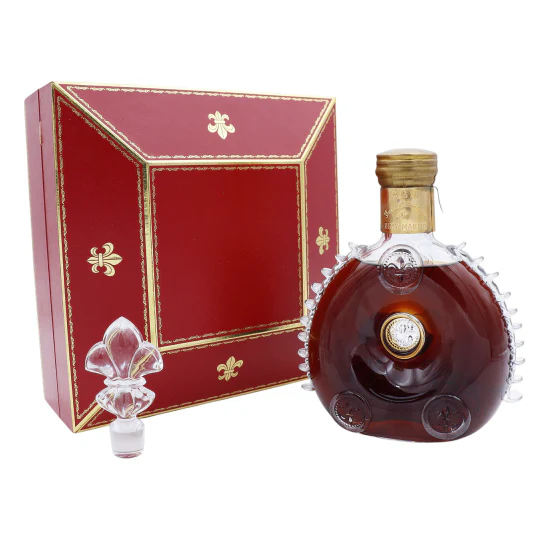
A vintage 1990s bottling of Louis XIII de Rémy Martin — the same extraordinary cognac in the decanter format of its era. Up to 1,200 eaux-de-vie each aged between 40 and 100 years, sourced exclusively from Grande Champagne, the Premier Cru of Cognac.
Louis XIII was created by Paul-Émile Rémy Martin in 1874 and has been the apex expression of the Rémy Martin house for 150 years. The cognac comprises up to 1,200 individual eaux-de-vie from Grande Champagne — the chalky Campanian soil of the Premier Cru zone, which produces the longest-lived and most complex Cognac distillates. Each component has been aged between 40 and 100 years before blending. The youngest component is older than most of the world's most celebrated whiskeys.
This 1990s bottling predates the current production era — a vintage decanter from a specific moment in the Louis XIII program. The 1990s production reflects the eaux-de-vie inventory of that decade: stocks aged through the 1950s, 1960s, and 1970s forming the oldest components. A 1990s Louis XIII is both a historic artifact of Rémy Martin's production history and a demonstration of what extraordinary aged Cognac achieved in that era's cellar master hands.
Tasting Notes
- Appearance: Deep amber with golden hues from decades in Limousin oak.
- Nose: Rich and complex — dried fruits, honey, and floral undertones from the multi-decade eaux-de-vie blend.
- Palate: Smooth and seamlessly integrated — figs, dates, warm spice, and the profound depth of a century-spanning blend.
- Finish: Long and lingering — the hallmark of the world's finest aged Cognac.
Specs
- House: Rémy Martin, Cognac, France (est. 1724)
- Region: Grande Champagne (Premier Cru of Cognac)
- Blend: Up to 1,200 eaux-de-vie aged 40–100 years
- Bottling era: 1990s
- Size: 750ml
Explore the full Cognac collection at Wooden Cork.
Frequently Asked Questions
- What makes a vintage Louis XIII bottling significant? Each decade's Louis XIII reflects the specific eaux-de-vie inventory available to the cellar master at that time — different aged components, different blend composition, and different crystal decanter design. A 1990s bottling is a snapshot of the Louis XIII program as it existed in that decade, with components aged through the mid-20th century as the oldest elements.
- How does the 1990s bottling differ from current Louis XIII? The liquid composition reflects the eaux-de-vie inventory of the 1990s — stocks distilled in the 1890s through 1950s forming the oldest components. Current Louis XIII uses more recently matured stocks. Each era's production reflects different terroir vintages and aging timelines.
- What is Grande Champagne Cognac? Grande Champagne is the Premier Cru appellation zone within Cognac — not the sparkling wine region. The chalky Campanian soil produces eaux-de-vie with the finest floral aromatics and greatest aging potential. All Louis XIII components come exclusively from this zone.
- Is this 1990s Louis XIII still available? A rare find. Vintage Louis XIII decanters are finite artifacts of Rémy Martin's historical production.
Description
A vintage 1990s bottling of Louis XIII de Rémy Martin — the same extraordinary cognac in the decanter format of its era. Up to 1,200 eaux-de-vie each aged between 40 and 100 years, sourced exclusively from Grande Champagne, the Premier Cru of Cognac.
Louis XIII was created by Paul-Émile Rémy Martin in 1874 and has been the apex expression of the Rémy Martin house for 150 years. The cognac comprises up to 1,200 individual eaux-de-vie from Grande Champagne — the chalky Campanian soil of the Premier Cru zone, which produces the longest-lived and most complex Cognac distillates. Each component has been aged between 40 and 100 years before blending. The youngest component is older than most of the world's most celebrated whiskeys.
This 1990s bottling predates the current production era — a vintage decanter from a specific moment in the Louis XIII program. The 1990s production reflects the eaux-de-vie inventory of that decade: stocks aged through the 1950s, 1960s, and 1970s forming the oldest components. A 1990s Louis XIII is both a historic artifact of Rémy Martin's production history and a demonstration of what extraordinary aged Cognac achieved in that era's cellar master hands.
Tasting Notes
- Appearance: Deep amber with golden hues from decades in Limousin oak.
- Nose: Rich and complex — dried fruits, honey, and floral undertones from the multi-decade eaux-de-vie blend.
- Palate: Smooth and seamlessly integrated — figs, dates, warm spice, and the profound depth of a century-spanning blend.
- Finish: Long and lingering — the hallmark of the world's finest aged Cognac.
Specs
- House: Rémy Martin, Cognac, France (est. 1724)
- Region: Grande Champagne (Premier Cru of Cognac)
- Blend: Up to 1,200 eaux-de-vie aged 40–100 years
- Bottling era: 1990s
- Size: 750ml
Explore the full Cognac collection at Wooden Cork.
Frequently Asked Questions
- What makes a vintage Louis XIII bottling significant? Each decade's Louis XIII reflects the specific eaux-de-vie inventory available to the cellar master at that time — different aged components, different blend composition, and different crystal decanter design. A 1990s bottling is a snapshot of the Louis XIII program as it existed in that decade, with components aged through the mid-20th century as the oldest elements.
- How does the 1990s bottling differ from current Louis XIII? The liquid composition reflects the eaux-de-vie inventory of the 1990s — stocks distilled in the 1890s through 1950s forming the oldest components. Current Louis XIII uses more recently matured stocks. Each era's production reflects different terroir vintages and aging timelines.
- What is Grande Champagne Cognac? Grande Champagne is the Premier Cru appellation zone within Cognac — not the sparkling wine region. The chalky Campanian soil produces eaux-de-vie with the finest floral aromatics and greatest aging potential. All Louis XIII components come exclusively from this zone.
- Is this 1990s Louis XIII still available? A rare find. Vintage Louis XIII decanters are finite artifacts of Rémy Martin's historical production.